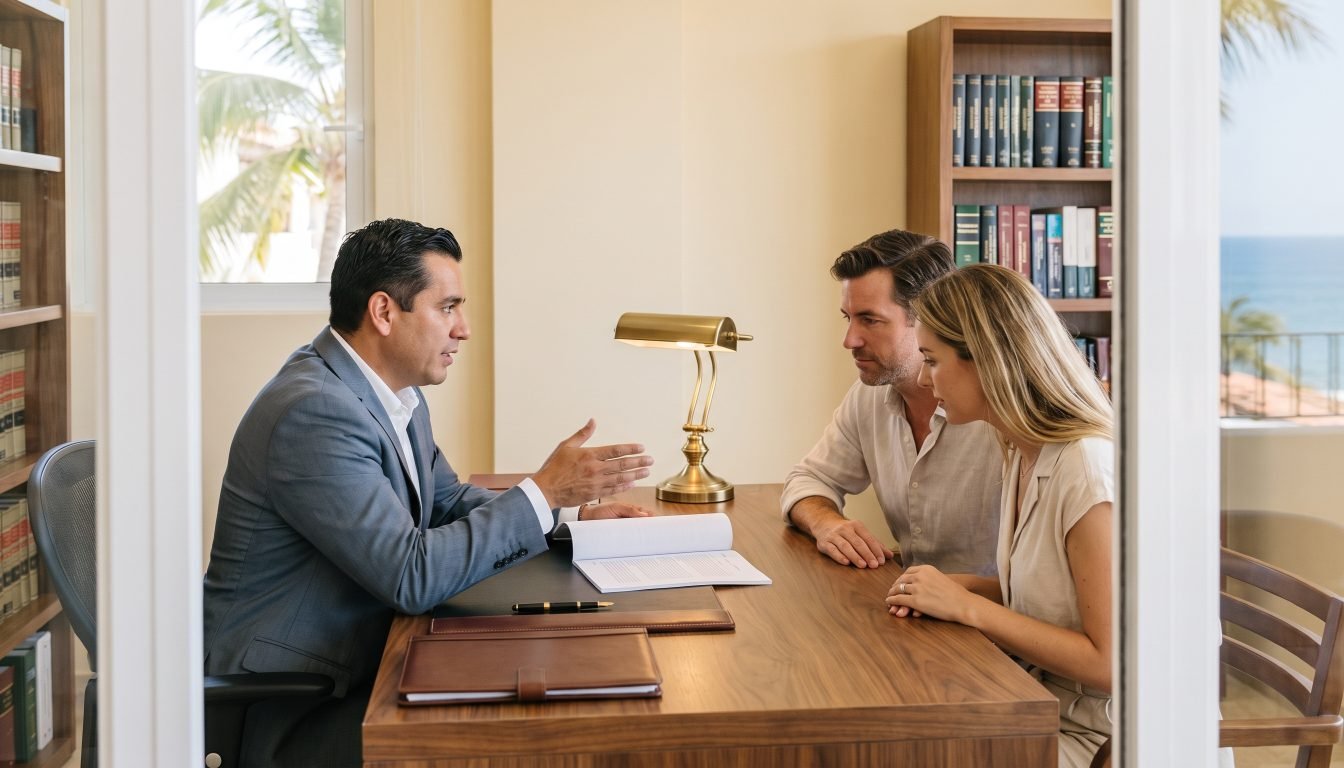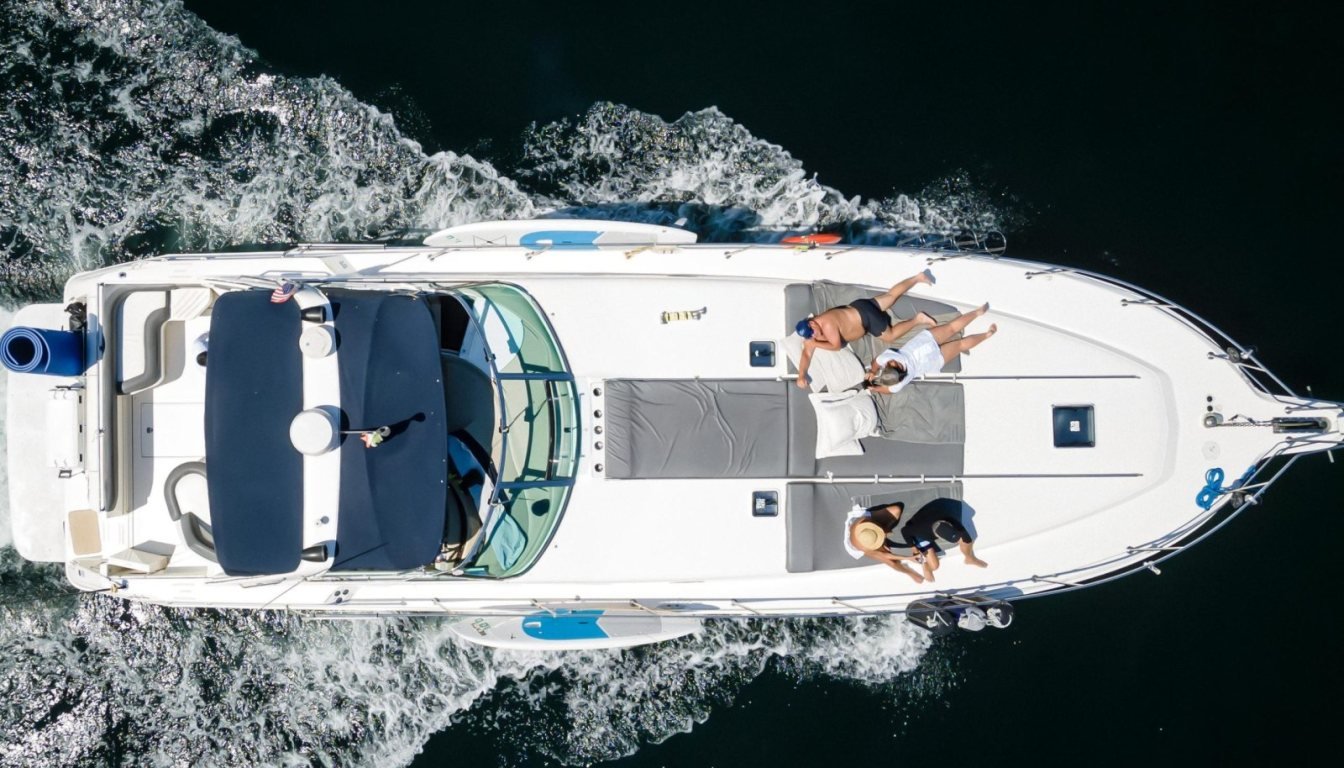
A private yacht day is one of the best things you can do in Puerto Vallarta, and the overwhelming majority of charters end with nothing more serious than a sunburn. Still, a boat rental is a contract, a passenger trip and, in some areas of Banderas Bay, a visit to a protected natural area — all at once. Each of those layers has rules. This legal checklist explains, in plain English and in general terms, what a careful client should look at before paying for a yacht in Mexico: who you are actually contracting with, what the written agreement should say, which insurance and documents matter, how weather and port closures work, and what the special rules around the Marietas Islands mean for your itinerary. It is general information, not legal advice for a specific case; if your charter involves a large deposit, a corporate event or anything unusual, have the paperwork reviewed before you sign.
Why a yacht charter deserves a legal checklist
The good news is that the market has matured. Owner-direct marketplaces such as Puerto Vallarta Yacht Charters & Rentals on BYRBO publish each vessel with its length, capacity, departure marina and starting price, which already gives you a written reference point if a dispute ever arises. That public listing is not a substitute for a contract, but it is valuable evidence of what was offered.
1. Identify who you are actually contracting with
The first legal question is simple and often overlooked: who is the other party? In Puerto Vallarta you may deal with the boat owner directly, with a company that operates several boats, with a broker or travel agency that resells charters, or with a marketplace that connects you with the owner. Each of these relationships carries different responsibilities.
Owner, operator, broker or marketplace
- Owner-operator: the person or company that owns the boat also runs the charter. Responsibility is concentrated in one party, which usually makes communication and claims easier.
- Operating company: a business that manages boats on behalf of owners. Ask for the company's legal name and tax ID (RFC) so you know who issues the invoice and who answers for the service.
- Broker or reseller: an intermediary who sells someone else's boat, usually with a markup. Your contract may be with the broker while the service is delivered by a different operator, which complicates any claim.
- Marketplace: a platform that publishes boats and puts you in touch with the owner. A boat rental by owner model keeps the chain short: you can see who runs the boat and agree terms with them directly.
Whatever the model, write down the full name of the person or company you pay, the boat's name and the marina, and keep it with your booking. Shorter chains are not automatically better, but they make it much easier to know who is responsible for what.
2. Get the essential terms in writing
A yacht charter in Mexico does not need a long, formal contract to be valid; an exchange of messages or a booking confirmation can document the agreement. What matters is that the key terms are written down before you pay. As a general rule, a well-documented charter covers at least the following points.
The minimum content of a charter agreement
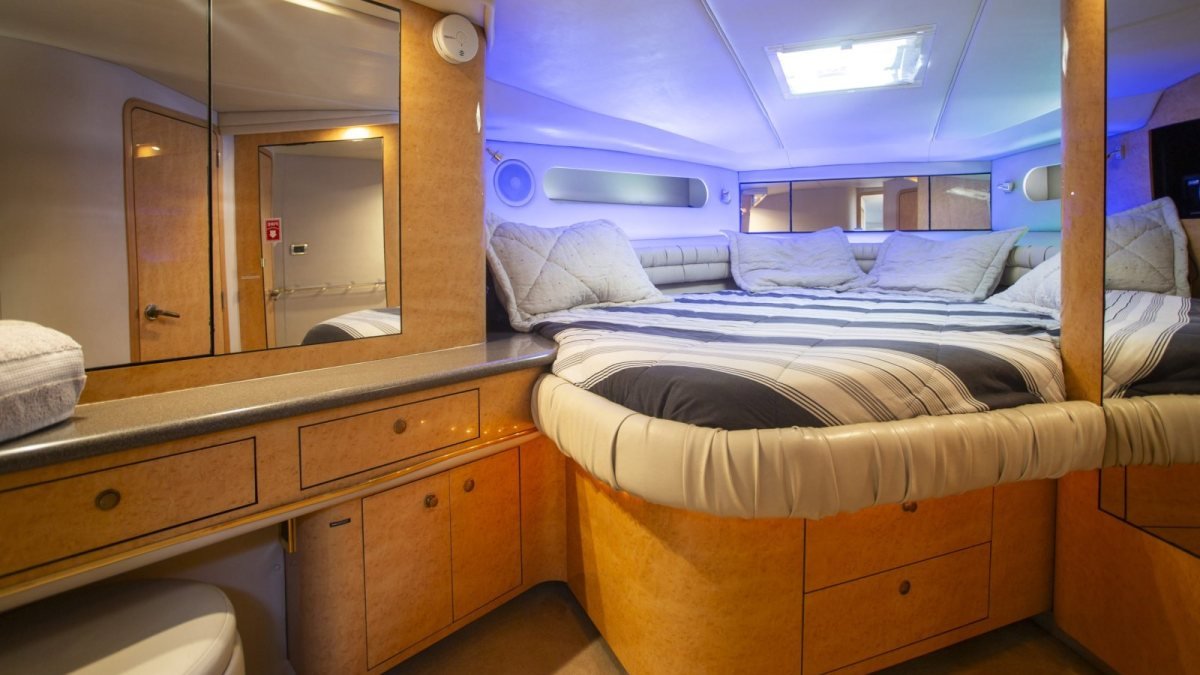
- The vessel: name, model and length — for example, a 50 ft Sea Ray Sundancer for up to 20 guests from Marina Vallarta, as published on its listing. If a substitute boat is possible, say under what conditions and of what size.
- Date, departure time, duration and marina, and what happens if guests arrive late.
- Maximum number of passengers, counting children, and whether the crew is included in that number.
- Price and currency (USD or MXN), whether taxes are included, and how the exchange rate is applied if you pay in pesos.
- What is included: captain and crew, fuel for a defined route, drinks, food, snorkel gear, paddleboards, marine park fees, fishing licenses.
- What is not included: gratuity, extra hours, additional destinations, catering upgrades.
- Deposit, balance and refund rules, including weather cancellations (see section 4).
- Itinerary and its limits: the planned route, and the captain's authority to change it for safety reasons.
- Damage and conduct rules: who pays for what, and rules on alcohol, music, smoking and minors.
Ask for the confirmation in a language you understand. If a Spanish document is the formal version, request an English summary or translation; in a dispute before Mexican authorities, the Spanish text will usually be the one that counts. Our team regularly reviews this kind of document as part of our contracts and negotiations work, especially for events with a high budget.
Compare the contract with the public listing
Screenshots of the listing are useful evidence. Save the page of the boat you booked, the photos, the stated capacity and the price at the moment of booking. Platforms that publish a structured fleet — the full list of yachts serving Puerto Vallarta currently shows 77 vessels, each with its marina and starting rate — make that comparison straightforward.
3. Captain, crew, safety equipment and insurance
Commercial passenger vessels in Mexico operate under federal maritime rules, and the port authority (Capitanía de Puerto) supervises departures, safety equipment and the qualifications of the people in command. You do not need to become an expert in maritime law, but you can reasonably ask a few questions and expect clear answers.
Questions worth asking before you pay
- Will the boat be operated by a professional captain, and is the crew size appropriate for the number of guests?
- Does the vessel carry life jackets for every passenger, including child sizes if children are aboard?
- Does the operator carry liability or passenger insurance, and can they show you a current policy or certificate?
- Is the boat authorized to carry paying passengers on the route you plan?
What insurance does and does not cover
Insurance is one of the most misunderstood topics. A boat's hull insurance protects the owner's vessel; it does not necessarily cover injuries to guests. Passenger or civil liability coverage is what matters to you as a client, and its scope, limits and exclusions vary by policy. Your own travel insurance may also cover medical expenses abroad, but many policies exclude certain water activities or alcohol-related incidents. Read the exclusions before the trip rather than after an accident.
On a well-run private yacht charter in Puerto Vallarta, the captain will give a short safety briefing before departure: where the life jackets are, how to move around the deck, rules for swimming and the use of the tender or paddleboards. That briefing is not a formality — it is part of how responsibility is allocated if something happens.
4. Deposits, cancellations and weather
Weather is the single most common reason charters change, and the one that causes the most disputes about money. Banderas Bay is sheltered and enjoys calm conditions most of the year, but summer storms, strong winds and the hurricane season can force the port authority to restrict or close navigation for small and medium vessels. When the port is closed, no responsible captain can leave, and no contract can oblige them to.
A clear weather clause protects both sides
A good agreement answers three questions in advance: who decides that conditions are unsafe (normally the captain and, above all, the port authority); what options the client has (reschedule within a period, credit or refund); and what happens if conditions deteriorate after departure. Without that clause, a cancellation becomes a negotiation at the worst possible moment.
Deposits and payment method
- Pay the deposit by a traceable method — card, bank transfer or the platform's checkout — and keep the receipt.
- Make sure the confirmation states the deposit amount, the balance and when it is due.
- Distinguish between a client cancellation (where the deposit may be partly or fully retained, according to the terms) and an operator cancellation or port closure (where a refund or a new date would normally be expected).
- For business events, ask in advance for a Mexican tax invoice (CFDI) if your company needs one; not every individual owner can issue it.
If a dispute does arise with a business that provides services to consumers, Mexico's consumer protection agency (PROFECO) can receive complaints and offer conciliation. For larger amounts or corporate contracts, a lawyer can send a formal demand and evaluate other remedies. In practice, a clear written cancellation policy prevents the vast majority of these situations. Many owners who publish private yachts for rent in Puerto Vallarta will send their weather and cancellation policy on request; ask for it before you pay the deposit, not after.
5. Marietas Islands and other protected-area rules
The Marietas Islands, about an hour from Puerto Vallarta's marinas and closer from La Cruz and Punta Mita, are a federal national park. Access to the islands and especially to the famous Hidden Beach (Playa del Amor) is regulated by the federal environmental authority, with daily visitor limits, authorized operators, specific days and hours, wristbands or access fees, and rules about where boats may anchor and where guests may swim or snorkel. Those rules change from time to time, so treat any fixed schedule you read online with caution.
What this means for your charter
- Not every boat can take you everywhere. A private yacht may be allowed to navigate near the islands without being authorized to land guests on the beach. Ask the operator exactly what the Marietas portion of the trip includes.
- Fees should be clear. If a park fee or wristband applies, the confirmation should say whether it is included or paid separately.
- Rules are strict. Touching coral, feeding fish, leaving trash or stepping onto restricted areas can result in fines for the visitor and sanctions for the boat. A captain who refuses to break the rules is protecting you.
Departing from the north of the bay can make a Marietas day shorter and calmer; operators listing Punta Mita yacht charters and La Cruz departures typically reach the islands faster than boats leaving from Marina Vallarta.
Whales, fishing and other special activities
Humpback whale watching in winter is regulated too: boats must keep minimum distances and limit time near the animals, and commercial whale-watching requires specific authorization. If fishing is part of your plan, Mexican law generally requires a sport-fishing license for people fishing from a boat; reputable fishing charters usually include the licenses for guests, but confirm it in writing. We covered the fishing side in more detail in our guide to fishing tours in Puerto Vallarta.
6. Special cases: corporate events, proposals and large groups
Large groups also need the right boat. The published fleet ranges from day boats for four guests to party catamarans for 120 or even 150 people departing from Marina Nuevo Vallarta, so check that the vessel's stated capacity — not a verbal promise — covers your guest list when you shortlist group yacht rentals in Puerto Vallarta.
Points to add for business charters
- The legal name of the contracting company, the RFC of the provider and the invoicing details.
- Responsibility for third-party suppliers brought aboard: caterers, photographers, musicians, decorators.
- Branding and filming permissions, and any restrictions on drones near protected areas.
- A contingency plan and an alternative date if the port is closed on the event day.
- Liability limits and proof of insurance appropriate to the number of guests.
7. How owner-direct booking simplifies the paperwork
From a legal point of view, every additional intermediary is another party whose terms may differ from the operator's. When a client books through a reseller, the price, cancellation policy and inclusions promised by the reseller may not match what the boat owner actually agreed to provide. Booking an owner-direct yacht rental reduces that gap: the person who sets the terms is the person who delivers the service.
Transparency is also a practical advantage. When the published listing states the capacity, the departure marina and the starting price — for instance, a Lagoon 42 catamaran from La Cruz for up to 20 guests from about USD 1,600 per day, or a Montefino 84 for up to 25 guests from about USD 7,500 per day — the client has an objective reference to compare against the final quote. If you want to see how prices and boat sizes compare before you negotiate, browse the Puerto Vallarta yacht charters page and narrow it down by the size of your group.
The checklist in one place
Before paying for yacht rentals in Puerto Vallarta, confirm that you can tick every item below. When you compare Banderas Bay yacht charters, ask each owner for their house rules on alcohol, minors and swimming as part of the quote — the answers say a lot about how professionally the boat is run.
- I know the full name of the owner or company I am paying.
- I have a written confirmation with the boat, date, time, duration, marina and passenger limit.
- The price, currency, taxes and inclusions are stated, including fuel, park fees and licenses.
- The deposit, balance and refund rules are written, with a specific weather and port-closure clause.
- I paid by a traceable method and kept the receipt.
- The operator confirmed a professional captain, safety equipment for every guest and their insurance coverage.
- I understand what the Marietas portion of the trip includes and which rules apply.
- My guests know the house rules on alcohol, minors and swimming — the captain has the final word on safety.
- For business events, invoicing, suppliers and liability have been agreed in writing.
- I saved a copy of the listing as it appeared when I booked.
Frequently Asked Questions
A long formal contract is not always necessary, but the key terms should be in writing before you pay: the boat, date, time, duration, marina, passenger limit, price and inclusions, deposit and refund rules, and a weather clause. A booking confirmation or an exchange of messages can document the agreement; for corporate events or large deposits, a proper written contract reviewed by a lawyer is advisable.
It depends on the cancellation terms you agreed to, which is why they should be written in advance. As a general practice, when the port authority closes navigation or the captain cancels for safety, clients are offered a new date, a credit or a refund, while cancellations initiated by the client may allow the operator to retain part or all of the deposit.
Not necessarily. Hull insurance protects the vessel; injuries to guests depend on whether the operator carries civil liability or passenger coverage and on its limits and exclusions. Ask the operator to show a current policy or certificate and check whether your own travel insurance covers water activities.
No. The Marietas Islands are a federal national park with daily visitor limits, authorized operators, set schedules and access fees. A private yacht may be allowed to navigate near the islands without being authorized to land guests on the beach, so ask exactly what the Marietas portion of your charter includes and whether park fees are included.
Mexican law generally requires a sport-fishing license for people fishing from a boat. Reputable fishing charters usually include licenses for their guests, but you should confirm in writing whether they are included in the price.
Sources & references
- Puerto Vallarta yacht charters by owner — BYRBO
- Yachts in Puerto Vallarta: full published fleet
- Private boat rentals in Puerto Vallarta
- Punta Mita yacht charters
- Sea Ray 50 Sundancer, Marina Vallarta
This article provides general information about chartering a yacht in Mexico and does not constitute legal advice for any particular situation. Rules on protected areas, navigation and fishing are set by the competent authorities and may change.
Planning a charter or a corporate event on the water?
Browse owner-direct yacht charters in Puerto Vallarta, then let us review the agreement, the cancellation terms and the liability clauses before you sign — in plain English.
Talk to an Attorney Contracts & Negotiations