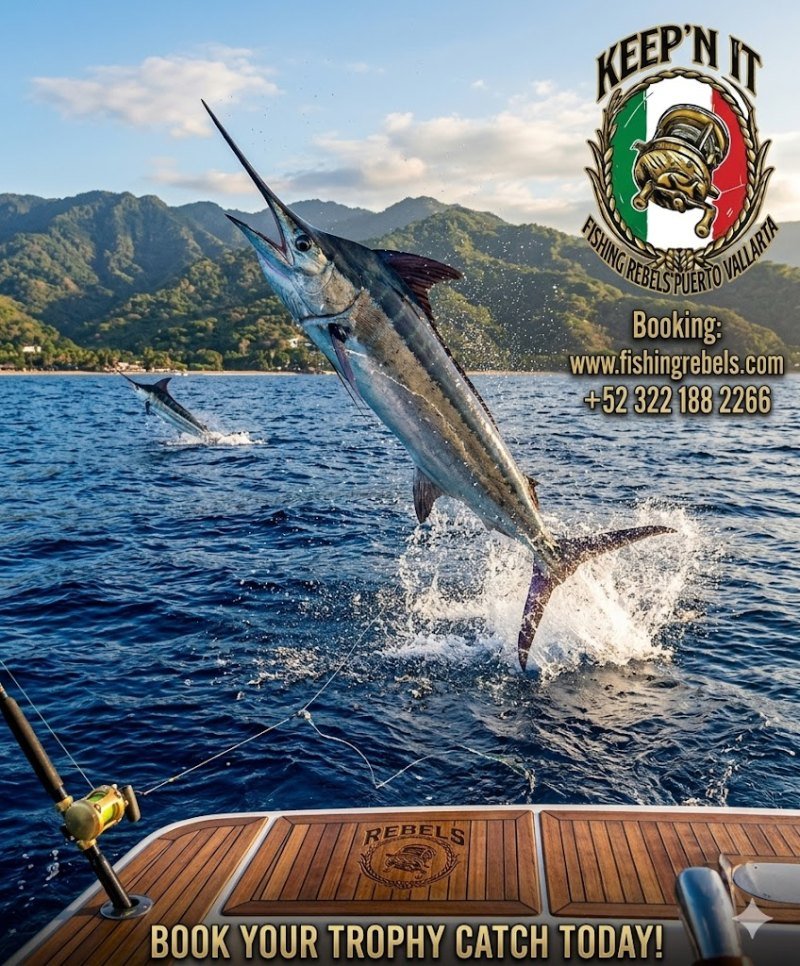
Almost every client who buys a home in Puerto Vallarta ends up on a boat within their first month. It is one of the genuine pleasures of living on Banderas Bay — and one of the few tourist activities here that is governed by a specific federal regulatory framework rather than by general commerce rules. Booking fishing tours in Puerto Vallarta is simple and safe when the operator is properly permitted. It becomes a problem when it is not. This guide explains, in plain language, what the law actually requires, what your signature on a waiver does and does not do in Mexico, and the handful of checks that separate a legitimate charter from an improvised one.
Sport fishing in Mexico is a licensed activity
This is the single fact most visitors do not know before they board. Recreational fishing in Mexican federal waters requires a sport fishing permit issued by CONAPESCA, the federal fisheries commission. The permit is personal — it covers the angler, not the boat — and is sold for different durations, typically a day, a week, a month or a year.
In practice, a well-run charter handles this for you: the operator either includes the permits for everyone aboard in the price or arranges them before departure. That is precisely why the question "are the fishing licenses included?" is the most useful thing you can ask before you pay a deposit. If the answer is vague, that vagueness usually extends to other parts of the operation.
Two practical notes. First, a permit is generally required for the people who fish, so a non-fishing companion along for the ride is treated differently — confirm with the operator how they handle mixed groups. Second, permit categories, fees and duration options are set administratively and are updated periodically; the operator should be working from the current schedule, and if you are arranging your own, confirm the current rules directly with CONAPESCA rather than relying on an old blog post.
Some species are legally reserved for sport fishing
Mexico's fisheries law does something unusual and, from a conservation standpoint, rather elegant: within a band of ocean measured out from the coastline, several of the most prized species are reserved exclusively for sport fishing and may not be taken commercially. The billfish family — marlin, sailfish and swordfish — sits in that protected category, along with roosterfish, dorado (mahi mahi), tarpon and shark.
For a visitor this has two consequences worth understanding. It is the reason Banderas Bay still produces the fishing it does, and it is also the reason your captain will insist on releasing certain fish rather than bringing them to the dock. That insistence is not the crew being difficult; it reflects a rule they are accountable for.
Daily limits and the culture of catch and release
Mexican regulations impose a daily bag limit per angler, with tighter sub-limits on the protected species — you may keep only a very small number of billfish or dorado in a day, and in the case of marlin and sailfish the practical norm on reputable boats is release, not retention. Undersized fish and species out of season are returned to the water.
Because the specific numbers are set by fishing standards that are reviewed and can be amended, the sensible approach is not to memorise a figure from an article but to ask the captain at the dock what the current limits are for the day you are going out. A professional operator answers that question instantly and without hesitation. Reputable Puerto Vallarta charters — Fishing Rebels among them — build catch and release into how they run a trip, particularly on billfish.
One more point that surprises people: what you keep is for personal consumption. Selling your catch, or moving quantities that look commercial, is a different legal category entirely. Most restaurants near the marinas will happily cook what you bring in for you — that is normal and expected. Selling it is not.
What makes a charter legitimate
A properly operated charter is not just a boat with a captain. It is a business that has to satisfy several distinct authorities, and each one leaves a paper trail you can ask to see:
- A vessel authorised to carry paying passengers. A private pleasure boat is not automatically allowed to take clients for money. Commercial passenger service is its own authorisation.
- Clearance to sail from the harbour master. Before departure, commercial vessels obtain a dispatch from the Capitanía de Puerto. This is also the mechanism that keeps boats in port when conditions are unsafe.
- Certified safety equipment. Life jackets in the right sizes and quantity, flares, radio, first aid — inspected, not improvised.
- Insurance covering passengers. Ask directly whether the vessel carries passenger liability coverage. This is the single most common gap in informal operations.
- A registered business that can issue a receipt. An operator who cannot give you a proper receipt or invoice is telling you something about how they are set up.
None of this requires you to become an expert. Asking three questions — are licences included, is the boat insured for passengers, and will I get a receipt — filters out nearly every operation you would not want to be on.
Waivers: what your signature does, and does not do
Visitors from the United States and Canada are used to signing a release and assuming it ends the matter. Mexican law treats this differently, and the difference matters.
A waiver here functions primarily as evidence that you were informed of the ordinary risks of the activity and accepted them. That is legitimate and useful for both sides. What a waiver does not do is contract away the operator's responsibility for its own serious fault. An operator who sails into a storm the harbour master closed the port for, whose life jackets are missing, or whose crew is intoxicated, does not become immune because you signed a piece of paper on the dock.
The practical takeaway is not to refuse to sign — you will not board — but to stop treating the waiver as the safety measure. The safety measure is the operator's permits, equipment and insurance. Read what you are signing, keep a photograph of it, and note that a document you are handed only in Spanish is still binding; if the amount at stake is significant, have it reviewed. Our corporate and commercial team reviews these agreements for clients regularly.
Insurance is your responsibility, not the boat's
Two gaps catch visitors out. The first is medical: many U.S. health plans provide little or no coverage in Mexico, and Medicare provides essentially none. The second is evacuation: an incident offshore can require transport that a standard travel policy will not fund.
Before any offshore day, confirm that your travel policy covers recreational boating and offshore activity — some exclude it as an adventure sport — and that it includes medical evacuation. For residents, this is a good moment to check what your Mexican coverage actually includes. The cost of the right policy is trivial next to the exposure it removes.
Paying, receipts and what to do if something goes wrong
Pay through a traceable channel wherever possible. A deposit sent by transfer to a personal account, with no written confirmation of date, boat, duration and inclusions, is the version of this transaction with no remedy attached to it.
Get the terms in writing before you pay, however informal the exchange feels — a message thread confirming the date, the vessel, the hours, what is included and the cancellation and weather policy is sufficient and is exactly what you will need if there is a dispute. Weather cancellation deserves particular attention: a reputable operator will tell you upfront whether a closed port means a reschedule or a refund, and will not treat your deposit as forfeited because the harbour master kept the fleet in.
If a consumer dispute does arise with a registered business, Mexico's consumer protection agency, PROFECO, provides a complaint and conciliation process — one that only helps you if the operator is a registered business in the first place, which is the practical reason the receipt question matters. For anything larger, or where injury or serious loss is involved, speak to a lawyer rather than negotiating alone in a second language.
If you own property here: chartering out your own boat
This is where property owners most often step into trouble without realising it. Owning a boat in Mexico as a foreigner is entirely possible. Taking paying passengers on it is a different legal activity altogether.
Carrying clients for money is commercial service: it requires the corresponding authorisation for the vessel, commercial insurance, a properly credentialed captain, and a business structure that can invoice the income and pay tax on it. The economics that look attractive — the boat sits idle most of the year, so why not charter it — collapse quickly when an incident occurs on an uninsured commercial trip run through a private vessel.
If you are considering it seriously, the sequence is to form or use an appropriate Mexican company, register for tax purposes and understand the income tax treatment that applies to foreign owners earning here, and obtain the vessel authorisations before the first paying guest steps aboard. Foreign nationals earning income in Mexico should also confirm that their immigration status permits it — a tourist permit does not.
Where the boats leave from
Practically speaking, the sportfishing fleet in this bay departs from a handful of places. Marina Vallarta and the Los Peines docks on the Jalisco side host the largest concentration of boats. Marina Riviera Nayarit in La Cruz de Huanacaxtle offers the shortest run to the offshore structure at Corbeteña and El Banco. Marina Nuevo Vallarta is the convenient option for anyone staying on the Nayarit side of the bay.
Confirm your exact meeting point in writing. "Puerto Vallarta" covers a great deal of coastline at five in the morning, and a missed departure is generally not refundable. If you want to book a sportfishing charter in Puerto Vallarta, operators based at Los Peines will give you a dock number rather than a landmark — that specificity is itself a good sign.
Frequently Asked Questions
Yes. Recreational fishing in Mexican federal waters requires a sport fishing permit issued by CONAPESCA, and the permit is personal rather than tied to the boat. In practice a well-run charter either includes the permits for everyone fishing in the price or arranges them before departure — so the useful question to ask before paying a deposit is simply whether licences are included.
Some of it. Mexican regulations set a daily bag limit per angler with tighter sub-limits on protected species such as billfish and dorado, and reputable boats release marlin and sailfish as a matter of course. Because the specific numbers come from official standards that are periodically reviewed, ask the captain at the dock what the limits are for that day. Anything you keep is for personal consumption — selling your catch is a different legal matter.
No. Under Mexican law a waiver mainly serves as evidence that you were informed of the ordinary risks of the activity and accepted them. It does not contract away the operator’s responsibility for its own serious fault — sailing when the port is closed, missing safety equipment or an impaired crew are not covered by your signature. Read what you sign, keep a copy, and treat the operator’s permits and insurance as the real safety measure.
A legitimate operation has a vessel authorised to carry paying passengers, obtains its dispatch from the harbour master before sailing, carries certified safety equipment and passenger liability insurance, and is a registered business that can issue you a receipt. Asking three questions — are licences included, is the boat insured for passengers, and will I get a receipt — filters out nearly every operation you would not want to be on.
Not without the right structure. Owning a vessel in Mexico as a foreigner is possible, but carrying paying passengers is commercial service and requires the corresponding vessel authorisation, commercial insurance, a properly credentialed captain, and a business able to invoice the income and pay tax on it. Foreign owners also need immigration status that permits earning income in Mexico — a tourist permit does not.
That depends on what you agreed in writing, which is why you should confirm the cancellation and weather policy before paying. When the harbour master closes the port, a reputable operator reschedules or refunds rather than treating the deposit as forfeited. If a dispute arises with a registered business, PROFECO offers a complaint and conciliation process — which only helps if the operator is formally registered.
Enjoy the bay. Get the paperwork right.
We advise foreign residents and property owners in Puerto Vallarta on contracts, liability, company formation and tax compliance — including owners who want to put a vessel or a property to commercial use legally. If you are weighing a decision that involves Mexican regulation, get a straight answer before you commit.
Talk to a Lawyer Corporation Services