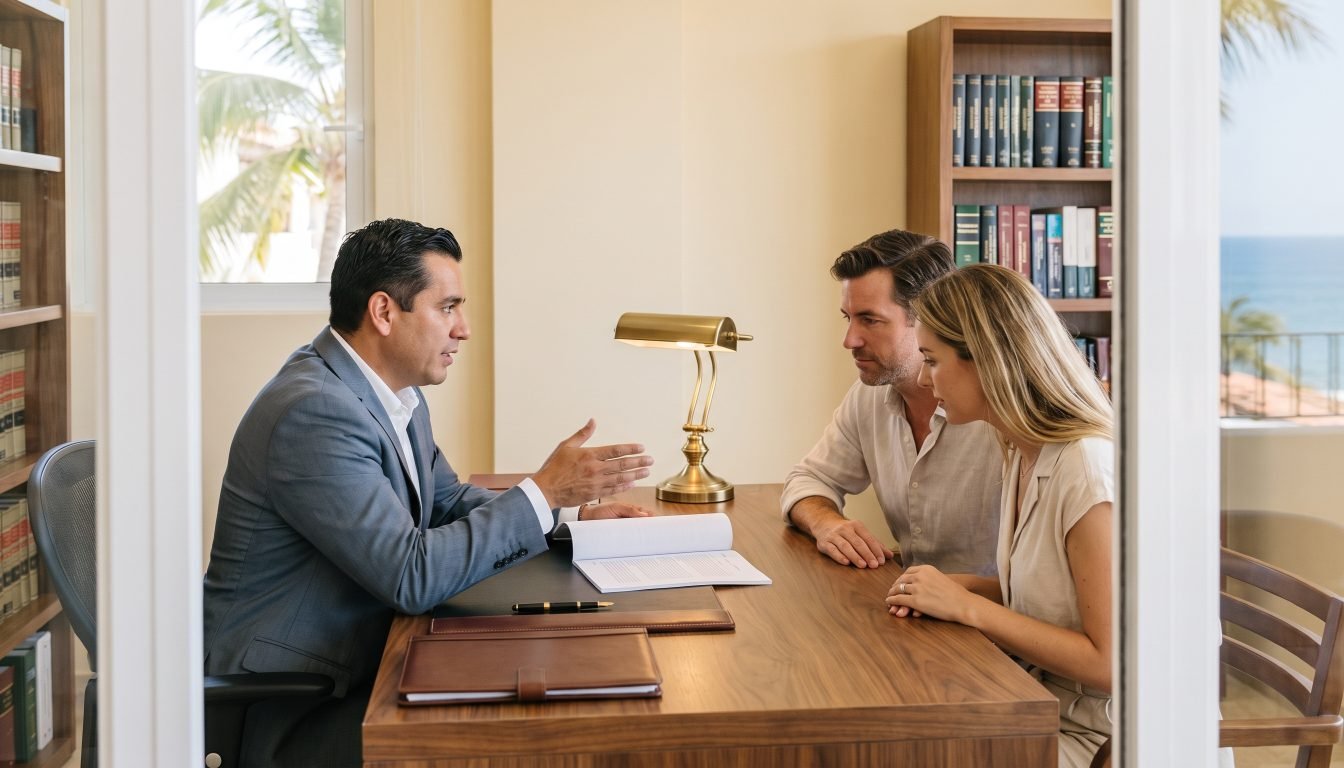
Puerto Vallarta's real estate market has never been busier — and wherever foreign buyers move quickly with large sums of money, fraud follows close behind. Most purchases here close cleanly, but every year a handful of buyers lose deposits, or worse, discover after closing that the title they paid for was never really for sale. None of these scams are exotic; they follow a small, repeatable set of patterns. Here is what they look like, and the safeguards that make them very hard to pull off.
Why Puerto Vallarta is a target
Cross-border deals create the exact conditions fraud thrives on: buyers who don't read Spanish-language documents closely, sellers and "agents" they may never meet in person before wiring money, unfamiliarity with how Mexican title actually works, and a coastal restricted zone where foreign ownership requires a trust structure many buyers have never used before. None of that means buying here is risky — it means the deal needs the same professional safeguards Mexican buyers and experienced investors already use as standard practice.
The most common scams
Title fraud and duplicate sales. A property is sold to more than one buyer, or "sold" by someone who does not actually hold clear title — sometimes a relative of the real owner, sometimes an outright impersonator. Without a proper title search, the first sign of trouble is often another buyer's lawyer calling months later.
Ejido land sold as private property. Ejido land is communal land that cannot legally be sold to a private buyer, including foreigners, until it has been formally regularized. Unscrupulous sellers sometimes offer ejido parcels with informal paperwork that looks convincing but conveys no real, transferable title.
Fake notaries and escrow agents. Because the notario público plays such a central, trusted role in Mexican closings, some scams involve someone impersonating a notary or an "escrow company" that is really just a bank account controlled by the fraudster.
Pressure to wire funds directly to the seller. Any request to skip escrow and wire your deposit or purchase funds straight to a seller's personal account — especially under time pressure ("the price goes up tomorrow") — is one of the clearest fraud signals in real estate anywhere in the world.
Pre-construction projects that never break ground. Buyers pay deposits into a development that either never gets built, stalls indefinitely, or turns out to have no valid permits — sometimes because the "developer" never had legal rights to the land in the first place.
Red flags worth stopping for
- A seller or agent who resists a formal title search or gets vague about who holds the deed
- Pressure to wire money quickly, outside of escrow, or in cash
- A price that is meaningfully below comparable listings with no clear explanation
- Documents that reference an ejido, communal, or unregularized land status
- A "notary" who cannot be independently verified through the local notary association
- A pre-construction developer who cannot show existing permits and a registered trust or land title
How a fideicomiso and a licensed notary protect you
Foreign buyers acquiring coastal property use a fideicomiso — a Mexican bank trust that legally holds title on the buyer's behalf. Setting one up requires the bank to review the title chain, which is itself a layer of scrutiny a private, undocumented deal never gets. Separately, a notario público is a licensed, government-appointed legal official — not a rubber stamp — who is personally responsible for verifying that the seller actually holds clear title, that property taxes are current, and that the transaction is properly recorded. A real notary catches most of the scams on this list before they can close.
The role of escrow in preventing fraud
Escrow adds a second, independent layer: a licensed third party holds your funds and only releases them once the agreed conditions are actually met — a clean title search, signed closing documents, a recorded deed. It removes the single riskiest moment in any cross-border purchase, which is wiring a large sum before you have any legal claim to the property at all. If you're new to how it works day-to-day, our guide to escrow when buying property in Mexico walks through the process step by step.
A short due-diligence checklist before you buy
- Independent title search — never rely on documents the seller hands you; have your own attorney pull the title history
- Verify the notary independently — through the state notary association, not just a name the seller gave you
- Use licensed escrow — never wire deposit or closing funds directly to a seller
- Confirm land status — private, regularized title, not ejido or otherwise restricted
- Check property tax and HOA payments are current before closing
- Get your own real estate closing representation — a bilingual attorney working for you, not the seller's agent
What to do if you suspect fraud
Stop the transaction and do not send any further funds. Gather every document, email and message you have. Contact an independent Mexican real estate attorney immediately — before you sign anything else, and before the other side has more time to move money or paperwork. Acting in the first days matters far more than acting perfectly; the earlier a lawyer is involved, the more options remain, from freezing funds still in escrow to reporting the notary or developer to the appropriate authority.
The good news: virtually every scam on this list is defeated by the same three habits — independent title verification, a licensed notary, and licensed escrow. Buyers who insist on all three, every time, essentially close the door on fraud before it can start.
Frequently Asked Questions
Title fraud — a property sold to more than one buyer, or by someone who does not actually hold clear title — is among the most damaging, along with ejido land sold as if it were private property. Both are caught by an independent title search before you sign anything.
Yes, if you wire funds directly to a seller instead of using licensed escrow. Escrow holds your money and only releases it once the agreed conditions are verified, removing the single riskiest moment in a cross-border purchase.
Confirm the notary's license independently through the state notary association, rather than relying on a name the seller or agent gives you. A licensed notario público is personally responsible for verifying clear title before a sale can close.
Ejido land is communal land that cannot legally be sold to a private buyer, including foreigners, until it has been formally regularized. Sellers sometimes offer it with informal paperwork that looks convincing but conveys no real, transferable title.
Stop sending money immediately, gather every document, email and message you have, and contact an independent real estate attorney right away. Acting in the first days preserves far more options than waiting.
Buy with real protection, not just good faith
We represent buyers — not sellers — through title review, escrow, notary coordination and closing, so fraud gets caught before your money moves, not after.
Talk to a Real Estate Attorney Real Estate Closing Services