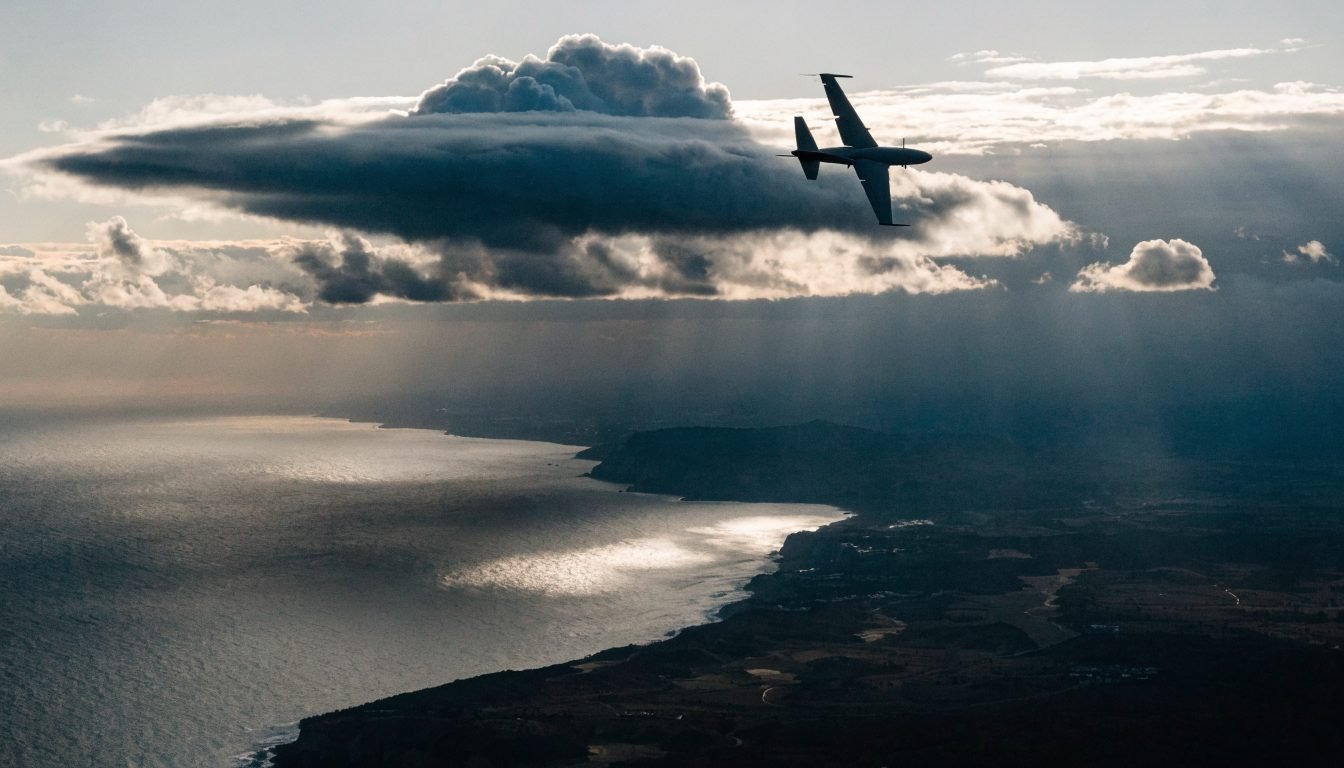
In recent weeks, reports have surfaced of a significant increase in U.S. military surveillance activity near Mexican airspace. According to CNN, the U.S. military conducted at least 18 reconnaissance missions along the southwestern U.S. border and in international airspace near the Baja California peninsula between late January and early February 2025.
The aircraft involved
These operations have used advanced platforms, including the Navy's P-8 Poseidon and the U-2 spy plane. The P-8 carries sophisticated radar systems capable of detecting submarines and gathering signals intelligence, while the U-2 — originally designed during the Cold War — conducts high-altitude surveillance.
Notably, this marks the first reported use of the U-2 in operations targeting Mexican drug cartels.
Mexico's response
The Mexican government, led by President Claudia Sheinbaum, acknowledged at least two of these missions, specifying that the aircraft remained in international airspace and did not violate Mexican sovereignty. Defense Secretary Ricardo Trevilla, however, expressed uncertainty about the exact objectives of the flights, leaving open the possibility that they were gathering intelligence on Mexican drug cartels.
The broader context
The escalation in surveillance aligns with President Donald Trump's intensified campaign against drug trafficking and cartel activity. On his first day back in office, Trump declared a national emergency at the southern border and designated Mexican drug cartels as foreign terrorist organizations — a designation that unlocks counterterrorism measures against these groups.
The increased U.S. military presence near Mexico has sparked debate over sovereignty and the nature of bilateral cooperation. Washington maintains the operations occur in international airspace and are essential to national security; in Mexico, concerns center on potential sovereignty violations and the implications of unilateral military action.
What it means going forward
The episode underscores the complex dynamics of U.S.–Mexico relations in security and counter-narcotics. The balance between effective action against organized crime and respect for national sovereignty remains a critical — and unresolved — point of discussion for both governments.
Following how policy shifts affect life in Mexico?
Cross-border policy moves fast. If changes on either side of the border raise questions about your residency, property or business in Mexico, we are here to orient you.
Contact Us More From the Blog